
How to Create a Cosy Reading Nook in a Small Flat
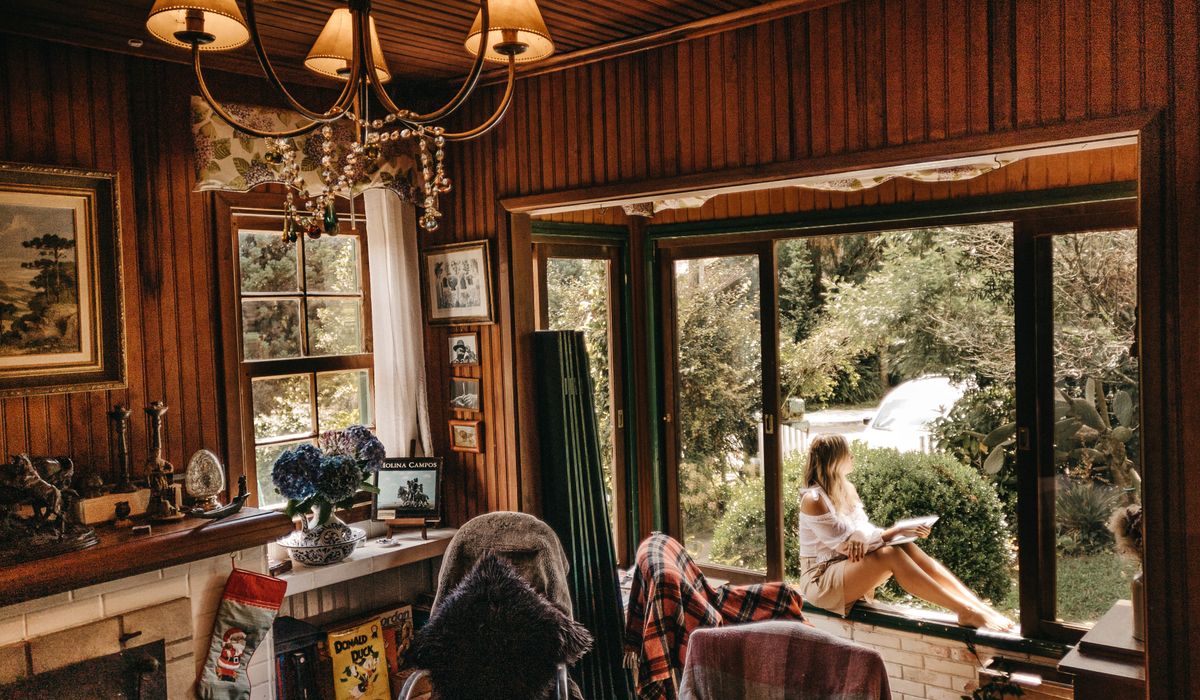
A reading nook is one of those small luxuries that makes a flat feel far bigger than it is. It gives you a reason to use a corner that currently holds nothing but a laundry basket, and it turns a few square metres into somewhere you actually want to spend an evening. The trick in a small space is restraint: one good chair, one warm light, one little table. Anything more and the corner starts to feel like a storage unit with a cushion on top.
Start With the Right Corner
Before you buy anything, walk around your flat and look for the corner that is already doing nothing useful. The best candidates tend to be near a window, out of the main walking route between the door and the sofa, and away from a radiator that will roast you in winter.
Measure the floor space properly rather than guessing. A nook needs roughly one metre by one metre of clear floor to work comfortably, plus a little breathing room. If a corner is narrower than 80cm, consider a slim chair and a wall-mounted shelf instead of a table, or look at the space beside a chimney breast or at the end of a hallway wide enough to take a chair.
Think about what you want from the spot. A morning coffee corner needs daylight and a surface for a mug; an evening reading spot wants lamplight and somewhere to rest a book. Knowing which one you are creating stops you from overfilling the space.
Choose a Compact Armchair That Fits Properly
The chair is the anchor, so it is worth getting the dimensions right. Look for an overall width of 70–85cm and a depth of no more than about 85cm, with a seat height of 43–48cm. A tub chair, a slim-armed accent chair, or a small wing chair all work well because they hug the sitter without sprawling into the room.
- Skip recliners and chunky motion furniture. They need clearance behind and in front, which small flats rarely have.
- Watch the arms. Wide, padded arms add 15cm on each side for no real benefit in a tight corner.
- Test the seat depth. If your knees are unsupported, you will slump; if the seat is too deep, you will perch. Around 50–55cm is a good starting point.
- Consider a swivel base. It lets one chair face the window, the room, or the television without you having to rearrange anything.
Leave at least 45–60cm of clear floor in front of the chair so you can get in and out without shuffling sideways, and keep the main walkway through the room at 75–90cm.
Lighting: Get the Floor Lamp Right
Overhead lighting flattens a cosy corner. A floor lamp does the opposite, pooling warm light exactly where you need it. Choose a bulb with a colour temperature of 2700K and a brightness of around 400–600 lumens, and make it dimmable if you can — it is the single cheapest way to shift a room from functional to inviting.
Height matters more than most people realise. When you are sitting down, your eyes are roughly 100–110cm from the floor, so the bottom of the lampshade should sit just above that, around 110–130cm. Any lower and you get glare; any higher and the light spreads uselessly across the ceiling.
Position the lamp to the side of your shoulder rather than directly in front, so the light falls onto the page and not into your eyes. Check the base diameter too — anything over about 30cm takes up more floor than the chair leg beside it, and a weighted base close to the wall is more stable than a wide tripod in a tight spot.
The Small Side Table That Earns Its Place
A side table should be able to hold a mug, a book, a pair of glasses and a small plant without becoming a dumping ground. Look for a top of 35–45cm across, with a height that sits roughly level with the chair arms, usually 55–65cm.
- Slim legs or a single pedestal keep the floor feeling open.
- A lower shelf or a small drawer gives you somewhere discreet to keep a notebook or the remote.
- A wall-mounted or clamp-on table is a brilliant option if floor space is genuinely tight.
- A stack of two or three large books can act as a table in a pinch and looks intentional.
Keep the surface deliberately sparse. One mug, one book, one small object — that is the whole brief.
Layer in Warmth With Textiles and Texture
Cosiness is mostly a texture problem, not a colour problem. A wool or boucle throw folded over the chair arm, a linen cushion or two, and a small rug underfoot will do more for the corner than any amount of paint.
Stick to two or three colours that echo the rest of the room — ochre, clay, sage, deep green, or a warm neutral — and let texture carry the interest. A 120 x 170cm rug works in most corners; if the space is very tight, a small runner or a sheepskin over the carpet is enough to define the zone.
Add a basket beside the chair for blankets and magazines. It keeps clutter hidden, gives the corner a finished look, and means you are not tempted to drape everything over the chair back.
Keep It From Crowding the Room
The final step is protecting the space you have just made. Choose furniture with visible legs where possible, since showing floor underneath makes a corner read as lighter. Pale walls, a mirror on the adjoining wall, and a single piece of art hung low enough to be seen from a seated position all help.
Be strict about what the nook is for. If it starts collecting post, chargers and stray paperwork, it stops being a place to relax. A five-minute tidy at the end of the week is usually all it takes. Get those four elements right — chair, lamp, table, texture — and a forgotten corner becomes the best seat in the flat.

4 Comments