
Layering Lighting for Warmth in Winter Evenings
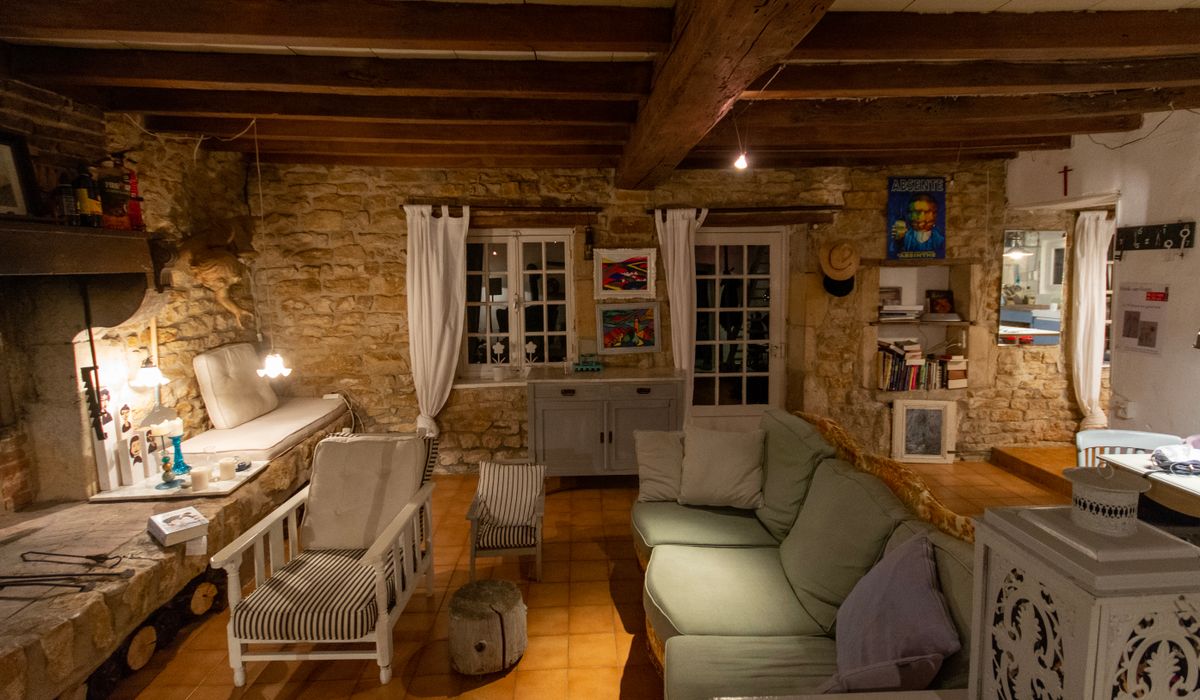
Why One Bright Light Leaves a Room Feeling Cold
Most of us grew up with a single pendant in the middle of the ceiling, switched on at dusk and left burning until bedtime. It does the job, but it flattens a room. One bright source casts hard shadows, bleaches colour out of fabrics and makes a winter evening feel oddly functional, like waiting in an office after hours.
The fix is not more light. It is light in more places, at more heights, and gentler than you think. Layering a room means giving yourself a soft wash overhead, a mid-level glow on the walls, and low pools of light exactly where you sit. In a small flat or a compact terraced house, this matters even more, because you cannot spread out into three rooms. You have to make one room do the work of several, and layers are how you do it.
The Ceiling Layer: A Gentle Wash, Not a Spotlight
Keep the overhead light, but demote it. Its job is background, not brilliance. Think of it as the bass line in a piece of music, present but never the thing you notice.
- Swap to the warmest bulb you can find — 2700K is a good standard, and 2200K or a "candle" finish is even cosier. Anything at 4000K or above will read as clinical.
- Fit a dimmer switch if you possibly can. It is one of the cheapest upgrades in the house and it changes how a room feels at 5pm and again at 10pm.
- If you have downlights, angle or shield the ones aimed directly at the sofa, and consider replacing a couple with uplighters that throw light onto the ceiling to bounce back down.
- A fabric or paper shade diffuses light far more kindly than bare glass or metal.
The Wall Layer: Softening the Corners of the Room
Wall lights are the forgotten middle layer, and they are brilliant in small rooms because they take up no surface at all. Two either side of a fireplace, a sofa or a bed instantly make a space feel finished.
- Mount them roughly 1.4 to 1.5 metres from the floor, or at shoulder height when you are seated, so the light falls around you rather than into your eyes.
- Shades that direct light up and down are the most versatile; a pure downlighter can feel a little dramatic, a pure uplighter a touch glary.
- Renting? Plug-in wall lights with a fabric cable and a discreet cable clip along the skirting work beautifully, and you can take them with you.
- Picture lights and slim wall-mounted reading lamps count too. Anything that puts light at mid-height adds depth.
Table and Floor Lamps: Creating Pools of Light
This is the layer that actually makes a winter evening feel warm. Pools of light, separated by gentle shadow, tell your eyes the room is intimate rather than exposed.
- Place a table lamp beside every seat you use regularly. Roughly 500 to 600mm tall is the sweet spot next to an armchair.
- The bottom of the shade should sit at or just below eye level when you are sitting down. Higher and you are squinting into a bulb.
- Two or three small lamps beat one large one. In a small space, cluster them: one on a side table, one on a shelf, one on the windowsill.
- A slim floor lamp tucked behind the sofa, arcing over a reading chair, lights a corner without eating floor space.
- Linen, pleated fabric and paper shades scatter light softly. Metal and clear glass give you sharper, more defined pools, which can look handsome but less forgiving.
Bulbs, Warmth and Dimming: The Practical Details
Once the fittings are in place, the bulbs decide whether the whole thing works. Aim for a total of roughly 800 to 1,200 lumens across all your lamps in a living room. That sounds low, and it is. You are lighting for atmosphere, not for reading small print across the room.
- Stick to one colour temperature throughout. Mixed warm and cool bulbs make a room look unsettled.
- If you cannot change a switch, smart bulbs or a plug-in dimmer let you dim lamps individually from your phone, which is almost as good.
- "Dim to warm" bulbs shift from soft white towards amber as you turn them down, mimicking the behaviour of a real filament. They are worth the extra few pounds.
- With LEDs, choose a trailing-edge dimmer and check bulb compatibility, otherwise you will get flicker or a buzzing noise.
Making Layers Work in a Small Space
Small rooms need fewer, closer layers rather than more spread out. Three modest pools of light will always feel warmer than one bright one, and they will also make the room feel bigger, because your eye reads depth rather than a flat wash.
- Place a mirror opposite a lamp so the pool of light is repeated. It doubles the glow for free.
- Rechargeable and battery table lamps need no sockets, so you can move them as the evening shifts from dining table to sofa to bedside.
- Keep a low light on in the hall or on the landing. A warm glow through a doorway makes a small room feel connected rather than boxed in.
- Candles and a string of warm-white fairy lights count as a fourth layer. Put them on a timer so they come on before you get home.
An Easy Evening Routine
Try this for one week. As the afternoon fades, switch on a single lamp rather than the ceiling. Add a second when you start cooking or settle in to eat. Bring up the overhead only if you genuinely need it, and dim or switch it off once the plates are cleared. For the last hour before bed, drop to one lamp and a candle.
Spend twenty minutes one evening rearranging what you already own — move a lamp from the bedroom to the corner behind the sofa, swap a cool bulb for a warm one, dig out a spare shade. You will be surprised how much warmer the same room feels, without buying a single piece of furniture.

4 Comments